English & grammar · Guide
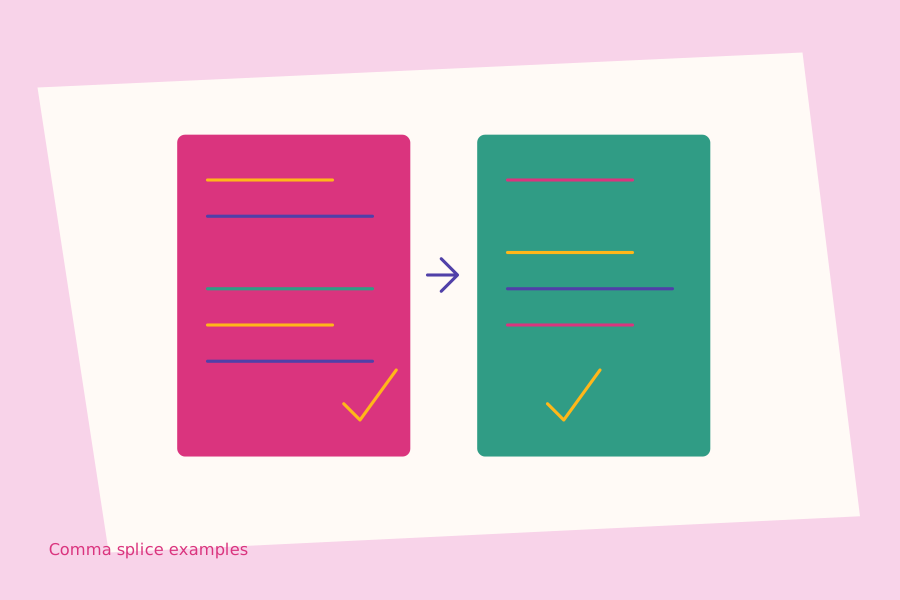
Comma splice examples
A comma splice occurs when a comma alone joins two independent clauses. Learn to spot the two complete thoughts and repair their connection with a period, conjunction, semicolon, or dependent clause.
Find an answer, follow a curiosity, or begin something new. Practical guides and current stories across twelve subjects.
A comma splice occurs when a comma alone joins two independent clauses. Learn to spot the two complete thoughts and repair their connection with a period, conjunction, semicolon, or dependent clause.
Comprehensible input is language you can follow well enough to get the message while still encountering something new. Choose material with context, check understanding, and use brief pauses or follow-up tasks to make meaning clearer.
Concise writing removes words that do not help the reader understand the point or act on it. The strongest edits keep the necessary meaning, context, and tone while making the main action easier to find.
A conditional sentence links a condition with a result. Its verb forms help readers understand whether the situation is open, imagined, or a past possibility that did not happen.
Connected speech is the way pronunciation shifts when words flow together in ordinary speaking. Learn how rhythm, reduced forms, and sound transitions work, then practise hearing and producing them in a short, useful phrase.
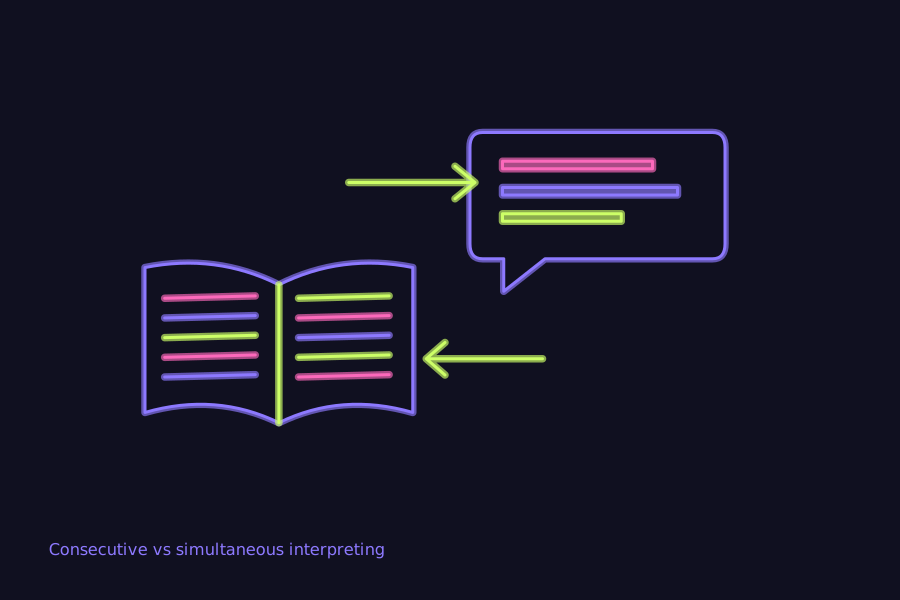
In consecutive interpreting, the speaker pauses while the interpreter delivers a segment; in simultaneous interpreting, the interpreter conveys the message as the speaker continues. The right mode depends on setting, pace, equipment, and how participants need to interact.
Consonance in poetry is the repetition of similar consonant sounds, often within or at the ends of nearby words. Learn how it differs from alliteration and rhyme, then use an original line exercise to tune a poem’s texture.
Countable nouns can be treated as separate units; uncountable nouns are usually presented as a mass or concept. Learn how the distinction affects quantity words and how a measure phrase can make an amount countable.
Sign languages can be central to Deaf cultural life, identity, and community, but Deaf people are not a single uniform group. Learn the language and local conventions while letting individuals describe their own preferences and identities.
Denotation is a word’s basic reference or dictionary meaning; connotation is the feeling, association, or social meaning it can carry. Reading both layers helps writers choose precise words and notice how language affects an audience.
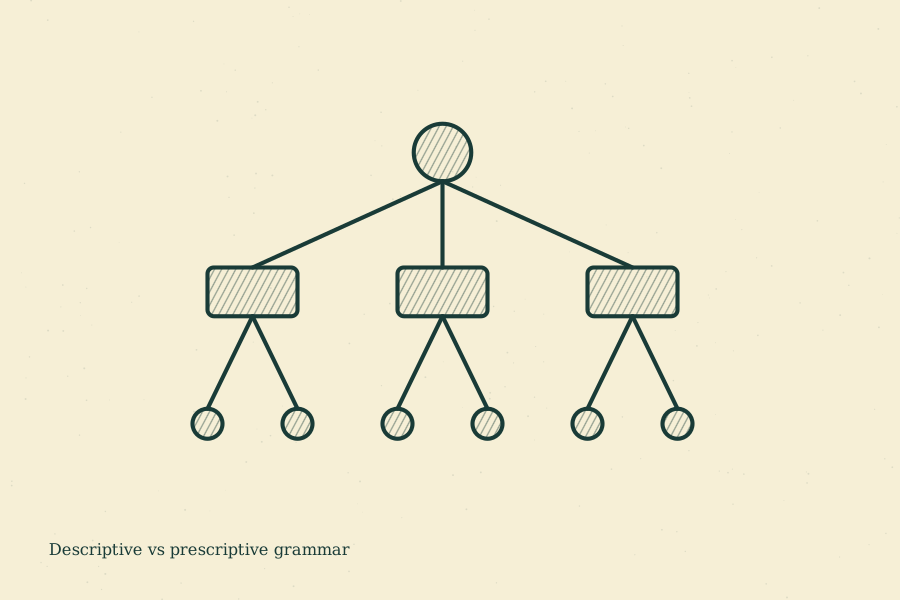
Descriptive grammar records the patterns people use; prescriptive grammar recommends forms for particular purposes. Knowing which question you are asking helps you analyze language without confusing a convention with a universal rule.
A dialect is a systematic variety of a language, and every speaker uses one. The boundary between language and dialect can involve structural, historical, political, and social factors, so mutual understanding alone cannot settle every case.
A monophthong keeps a relatively steady vowel quality, while a diphthong moves from one vowel quality toward another within a syllable. Accent and analysis affect how particular English vowels are described.
Editing improves a draft’s meaning, structure, and clarity; proofreading checks a nearly finished text for surface errors. Use them at different stages, in that order, to make revision more effective.
Elision is the omission of a sound in a particular pronunciation context. It can make a phrase easier to say at conversational speed, but it is variable, and recognizing it matters more than forcing it into every utterance.
English /r/ and /l/ differ in tongue configuration and, often, in the way the sides of the tongue manage airflow. English “r” has several valid pronunciations across varieties; practice a target contrast through short words and phrases rather than assuming one universal accent.
False friends are words in different languages that look or sound alike but have different meanings. Context, part of speech, and example sentences help prevent a familiar-looking word from steering you toward the wrong interpretation.
Formal and informal language are styles suited to different relationships, purposes, and situations. They exist on a continuum, and effective style shifting means adapting to context without treating one variety as universally correct.