
Multilingual lives · News & context
Released on 20 November, UNESCO’s Arab States pre-primary report names language as one barrier that can exclude children. Its country cases show why access and the language of early learning need to be considered together, without treating one model as universal.
Coverage 20 Nov 2026↗
Multilingual lives · News & context
A 17 November Council of Europe conference connected regional and minority language revitalization with family transmission, education, media, public services, work and digital tools. Its agenda offers a practical way to ask whether support reaches everyday settings.
Coverage 17 Nov 2026↗
Multilingual lives · News & context
Launched on 2 November 2026 by the Council of Europe and ALTE, a new survey will map language and knowledge-of-society requirements, alongside learning opportunities for migrants. Its results are still pending.
Coverage 2 Nov 2026↗

Learning languages · Guide
A language-learning portfolio turns scattered practice into a useful record. Track what you can do, set one next goal, and keep a few examples that show your work in context.
5 min read↗

Languages of the world · News & context
At a 5 November Council of Europe conference, Romani language policy, education, literature and AI came together. The practical question is how commitments become resources people can use in daily life.
Coverage 5 Nov 2026↗

Inside language · Guide
Evidentiality is a way grammar can mark how a speaker knows something: by seeing it, inferring it, or hearing it from someone else. The category varies across languages, and information source is not the same as certainty.
5 min read↗
Multilingual lives · News & context
Announced on 7 October, the UNESCO Chair in Digital Futures will address gaps in language data, tools and policy. What that remit could mean for fonts, keyboards, datasets and community use.
Coverage 7 Oct 2026↗

Words & meaning · Guide
A corpus lets you inspect words in many real contexts. Search a phrase, compare concordance lines and text types, then use the patterns as evidence for a choice—not as a rule that every speaker follows.
4 min read↗
Learning languages · Guide
A bilingual dictionary can suggest a useful equivalent, but the right choice depends on the sentence, grammar, tone and audience. Use it as a map: compare meanings, inspect examples and collocations, then test the candidate in your own sentence.
4 min read↗
Multilingual lives · News & context
At its 14–15 October meeting, the Council of Europe’s European Centre for Modern Languages adopted its 2027 programme and previewed resources on teachers’ plurilingual wellbeing, subject-language teaching and adapting materials for democratic education. Their first language versions are expected in January.
Coverage 14 Oct 2026↗
Inside language · News & context
Released on 22 October 2026, Unicode CLDR 49 adds locale data and formatting options for dates, times, numbers and other language-sensitive interfaces. Here is what the update means for people building or using multilingual software.
Coverage 22 Oct 2026↗
English & grammar · Guide
Choose a before a consonant sound and an before a vowel sound, listening to the first sound of the next word rather than looking at its first letter. The article follows pronunciation, including in abbreviations.
3 min read↗
Everyday communication · News & context
Global Media and Information Literacy Week ran from 24 to 31 October 2026 under the theme “We All Play a Part.” UNESCO described a decentralized programme of regional and thematic events organized with partners.
Coverage 31 Oct 2026↗

Learning languages · Guide
A2 centers on familiar expressions and simple routine exchanges; B1 extends toward main points on familiar topics, connected text, and handling many travel situations. The clearest comparison is what a learner can do in a specific task.
3 min read↗
Inside language · Guide
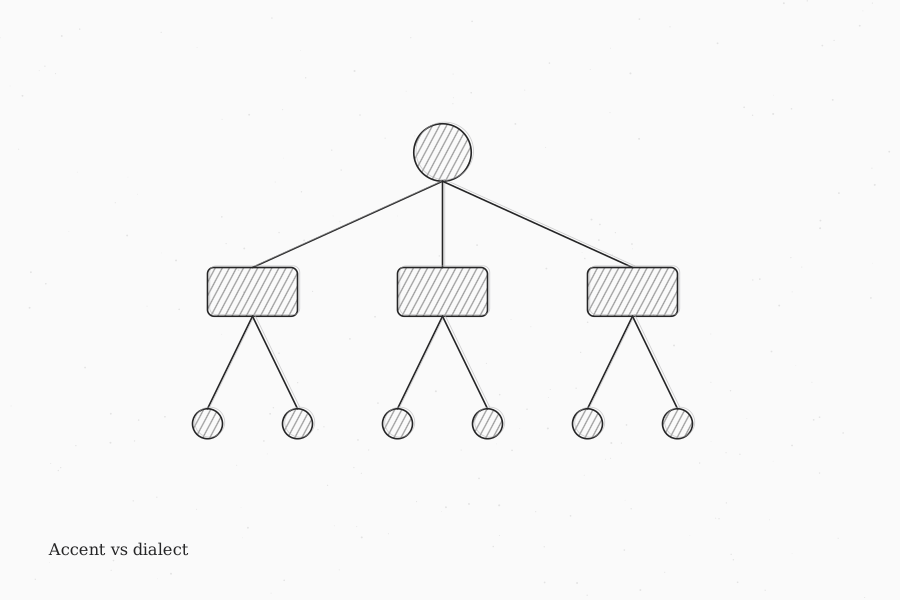
Accent refers to pronunciation patterns; dialect includes pronunciation and can also include vocabulary and grammar. A person’s accent is one part of their language variety, and no accent is inherently better or more correct.
3 min read↗
Speech & sound · Guide
Pronunciation describes how sounds and words are spoken; accent is the patterned way a speaker pronounces a language. An accent is not a defect, and pronunciation practice can target a specific listener-facing goal without requiring someone to erase their variety.
3 min read↗
Words & meaning · Guide
Both acronyms and initialisms are built from initials, but the usual distinction is how people pronounce them: as a word or as individual letter names. Apply that test, then introduce either form with enough context for readers.
3 min read↗

Everyday communication · Guide
Active listening means showing that you are attending to a speaker’s meaning and checking your understanding before responding. Try brief paraphrases, clarifying questions, and pauses that leave room for correction.
3 min read↗