
Inside language · Guide
Syntax describes how words and phrases are arranged; semantics concerns the meaning of those expressions and how their parts combine. A sentence can be well formed yet surprising or false, so analyze structure and interpretation separately.
3 min read↗
Translation & interpreting · Guide
Terminology management is the practice of deciding, recording and maintaining how important terms should be used across a project. A useful term record explains meaning and context, not just a preferred translation.
3 min read↗

Speech & sound · Guide
The IPA vowel chart maps vowels by tongue height and frontness, with symbols placed to indicate tongue position and lip rounding shown separately. It is a practical guide to vowel contrasts, not a map of every speaker’s mouth.
3 min read↗
English & grammar · Guide
Use than to compare, and then to place events or ideas in sequence. A substitution test catches most slips: try “compared with” for than and “next” or “at that time” for then.
3 min read↗
English & grammar · Guide
There can point to a place or help introduce a sentence, their marks possession, and they’re contracts they are. Sound them out in context: all three may rhyme, but their grammar differs.
3 min read↗
Languages of the world · Guide
In a tonal language, pitch patterns on syllables or words can distinguish lexical or grammatical meaning. Tone differs from ordinary sentence intonation, though real languages may combine pitch functions in ways that resist a simple binary.
3 min read↗
Everyday communication · Guide
Tone of voice is the vocal quality that shapes how spoken words come across, including pitch, pace, volume, and emphasis. Interpret it in context, then use a specific question or wording to repair uncertainty rather than guessing at intent.
4 min read↗
Writing & work · Guide
Topic sentences tell readers what a paragraph will establish and help writers keep supporting details focused. These examples show how to shape claims for different paragraph purposes.
3 min read↗
Translation & interpreting · Guide
Transcreation adapts a message creatively so it can produce a similar effect for a new audience, while protecting the source’s purpose and essential facts. A fictional spoken-word invitation shows how to test an adaptation responsibly.
3 min read↗
Writing & work · Guide
Transition words signal relationships such as contrast, sequence, cause, and addition. Choose one only after deciding how two ideas connect, then punctuate it according to the sentence structure.
3 min read↗
Multilingual lives · Guide
Translanguaging is the flexible use of a person’s language resources to make meaning, learn, or communicate. This guide distinguishes it from simple word-for-word translation and offers a classroom exercise for moving between exploratory thinking and a focused final message.
4 min read↗
Translation & interpreting · Guide
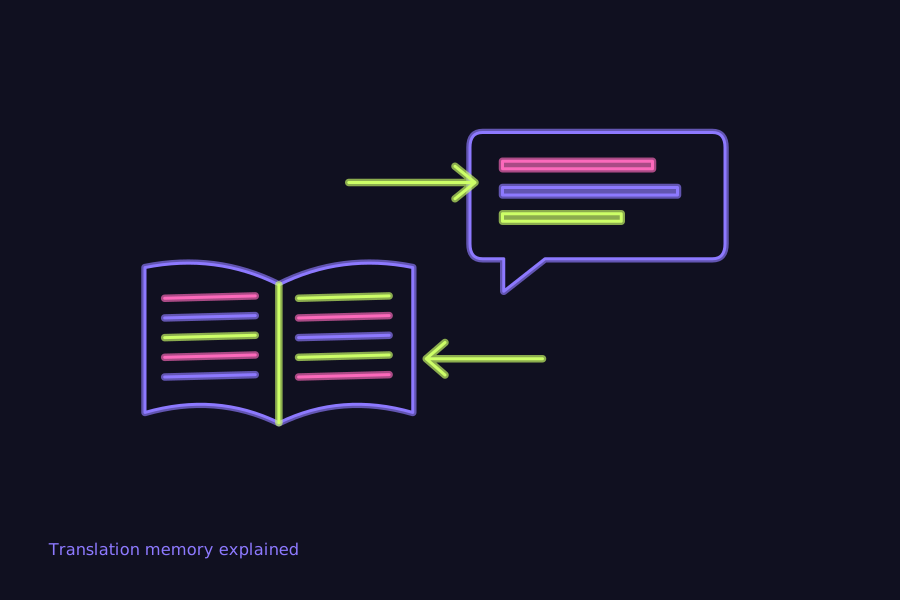
A translation memory is a searchable store of previously translated text segments and their approved equivalents. It can suggest a match when similar text appears again, but people still judge whether the old wording fits the new context.
3 min read↗

Translation & interpreting · Guide
Translation usually works with written material; interpretation conveys spoken or signed communication in real time or near real time. A meeting example shows how to decide which service fits the task and what preparation each requires.
3 min read↗
Everyday communication · Guide
Verbal communication uses words, spoken or written; nonverbal communication includes cues such as timing, gesture, facial expression, and space. People interpret them together, but cues depend on context.
4 min read↗

Speech & sound · Guide
Voicing is the vibration of the vocal folds during a sound. Learn a simple way to feel the difference, hear it in English consonants, and practise without confusing voicing with spelling or volume.
4 min read↗
Speech & sound · Guide
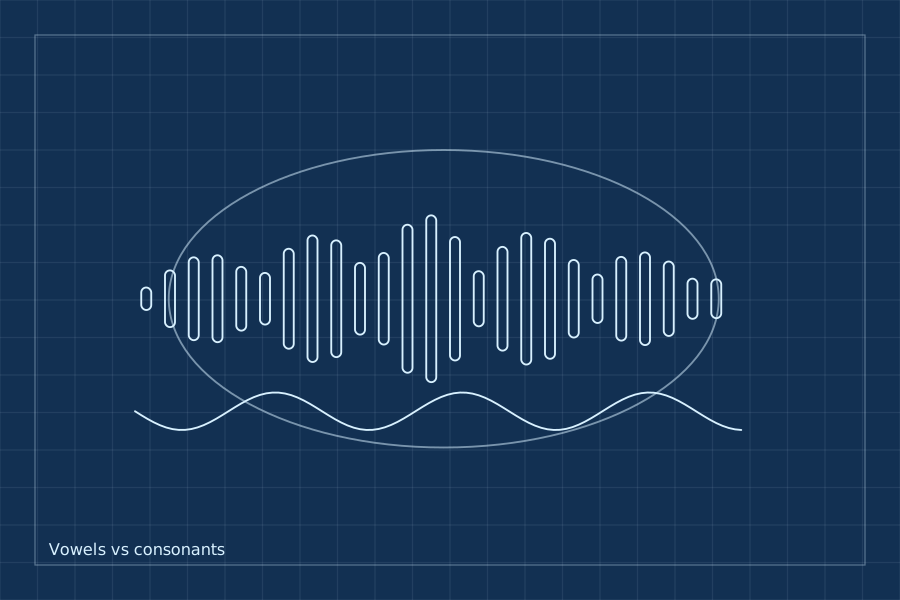
Vowels are made with a relatively open vocal tract; consonants involve a narrower constriction or closure. Learn to notice the difference in articulation, then use a short word-pair exercise to hear and feel how the sounds work together.
3 min read↗

Languages of the world · Guide
A useful start in Welsh combines listening, pronunciation, everyday phrases, and a clear choice of learning variety. Welsh spelling gives learners clues to sound, but it is best learned alongside audio and real examples.
3 min read↗
English & grammar · Guide
A clause is a group of words organized around a subject and a verb. Some clauses express a complete thought and can stand alone; others need another clause to complete the meaning.
3 min read↗