Words & meaning · Guide
Context helps listeners select among possible word senses, understand what a speaker refers to, and infer what an utterance is doing. A word’s available meanings and the situation together shape an interpretation.
3 min read↗
Inside language · Guide
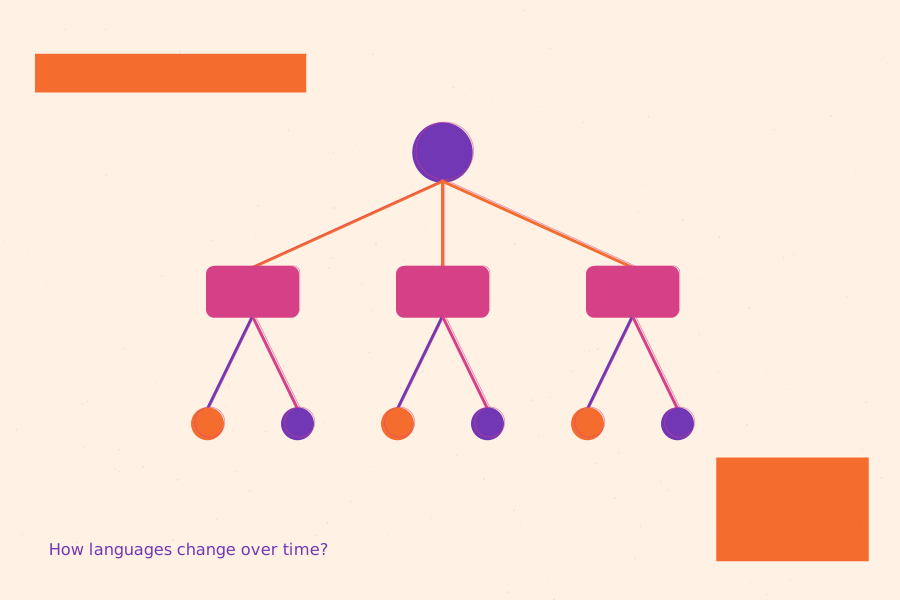
Languages change as speakers transmit and reshape patterns across generations and situations. Sound, word meaning, grammar, and vocabulary can all shift, while communities vary in how quickly and visibly those shifts take hold.
3 min read↗

Learning languages · Guide
There is no single reliable timeline for learning a language: the answer depends on what you mean by “learn,” your starting point, practice, and opportunities to use it. Define a task and track what you can do over time.
4 min read↗
Languages of the world · Guide
UNESCO describes approximately 7,000 languages as still in use, within 8,324 documented languages. These figures count different things, so the larger total should not be mistaken for the number of languages currently used.
3 min read↗
Speaking & storytelling · Guide
A five-minute speech often falls around 600–750 words at a steady 120–150 words per minute, but delivery style and pauses change the total. Rehearse aloud to find your own workable draft length.
3 min read↗
Writing & work · Guide
Adapt writing by changing the context, vocabulary, detail, and format that readers need, while keeping the facts and intended meaning steady. Start from a real reader task and check whether the draft supports it.
3 min read↗
Poetry & spoken word · Guide
Analyze a poem by noticing what it says, how its language and form shape that meaning, and where your reading is supported by details. A worked example shows how to move from observation to interpretation.
3 min read↗
Everyday communication · Guide
A sincere apology names what you did, recognizes its effect, takes responsibility without excuses, and offers a relevant repair. Then give the other person room to respond; an apology is not a demand for instant forgiveness.
4 min read↗
Everyday communication · Guide
Better questions are focused, answerable, and suited to what you need to learn. Start with a clear purpose, ask one thing at a time, then listen and follow up on the answer.
4 min read↗
Writing & work · Guide
Ask one focused question, identify the point that confused you, and explain what you need to do next. A clear subject and a brief, courteous message make it easier for the recipient to give a useful answer.
3 min read↗

Translation & interpreting · Guide
A useful translation brief tells the translator what the text is for, who will read it, where it will appear, what must stay accurate, and how success will be reviewed. Add references and constraints that resolve real questions, not vague demands for a literal result.
3 min read↗
Translation & interpreting · Guide
Check a translation by comparing meaning, purpose, terminology, and usability against the source, then review it with someone qualified in the target language. A fluent-sounding sentence can still change an instruction, omit a condition, or mislead its intended reader.
3 min read↗
Everyday communication · Guide
Check understanding by inviting the other person to explain the key point or next step in their own words, then clarify any mismatch. A useful check tests the message and creates room for questions; it does not quiz or blame the listener.
4 min read↗
Poetry & spoken word · Guide
Choose a performance poem by testing its voice, shape, emotional range, and fit for the room. A short read-aloud exercise can reveal whether the poem gives you something clear and sustainable to communicate.
3 min read↗
Everyday communication · Guide
Clarify a misunderstanding by describing the point of confusion without blame, asking what the other person understood, and restating your meaning in concrete terms. Confirm the next step so both people leave with the same working picture.
4 min read↗
Writing & work · Guide
A useful deadline message identifies the deliverable, gives an unambiguous date and time, explains what the timing affects, and says what to do if the schedule is at risk. Confirm dates and time zones when relevant.
4 min read↗
Everyday communication · Guide
Communicate across cultures by checking assumptions, adapting to the other person’s preferred way of exchanging information, and asking clear, respectful questions. Treat each interaction as specific; a person’s language or background does not predict every preference.
4 min read↗

Everyday communication · Guide
Clear communication gives someone enough precise information to understand a message and act on it. Learn to separate observation from interpretation, name the request, and check whether your listener understood the same thing you meant.
4 min read↗