English & grammar · Guide
Lay vs lie
In the common meanings, lay takes an object: someone lays something down. Lie means to recline or rest without an object. The past tense of lie is lay, which is why the pair causes confusion.
Find an answer, follow a curiosity, or begin something new. Practical guides and current stories across twelve subjects.
In the common meanings, lay takes an object: someone lays something down. Lie means to recline or rest without an object. The past tense of lie is lay, which is why the pair causes confusion.
Use fewer with plural countable things and less with amounts treated as a whole. The choice depends on how the noun is framed, so a quick test is to ask whether you can count the items one by one.
Linking sounds are transitions that let neighboring words flow together, especially when one word ends in a consonant and the next begins with a vowel. A short listen-and-repeat exercise can make these transitions easier to hear and use.
Literal language uses words in a direct sense; figurative language invites a comparison, image, or conventional meaning beyond that direct sense. Context helps distinguish the two and reveals what a figure contributes.
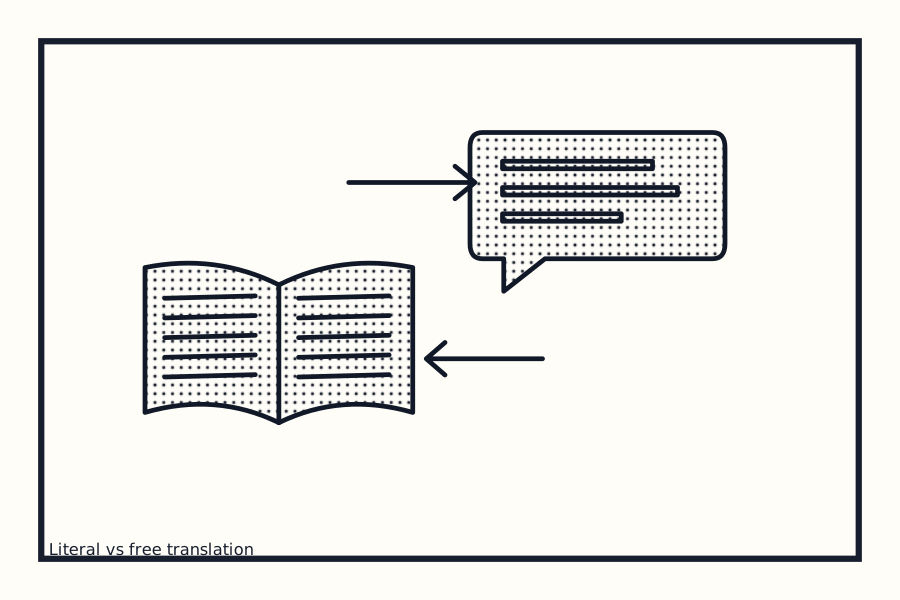
Literal translation stays close to the source wording and structure; free translation gives greater priority to the intended meaning and effect. A fictional announcement demonstrates how to choose a level of freedom without losing essential details.
A loanword is a word English has taken from another language and made part of its own vocabulary. Borrowing can preserve a sound, shift a meaning, or reshape pronunciation and spelling as speakers use the word.
Translation changes language; localization adapts a product or document for a particular locale, including formats, conventions and sometimes design. A fictional event page shows how to audit both layers before launch.
Machine translation generates a target-language version automatically; human translation uses a person’s judgment to interpret context, purpose and audience. A fictional public notice shows how to review output before people rely on it.
Mandarin and Cantonese are distinct spoken languages or varieties within the broader Chinese language landscape, with differences in pronunciation, vocabulary and usage. Shared writing practices do not make spoken conversation automatically interchangeable.
A minimal pair is two words that differ in one sound in the same position and have different meanings. Use clear examples to practise listening, test a contrast, and avoid mistaking spelling differences for sound differences.
Modern Standard Arabic is a formal shared standard used widely in writing and prepared public speech, while Arabic dialects are regional varieties used heavily in everyday conversation. Most learners should choose based on the situations they want to handle.
Morphology studies how words are built from meaningful or grammatical pieces. Learn to identify roots and affixes, distinguish word-building from grammatical endings, and test a word’s structure with a simple analysis.
In Statista Research Department’s 2026 tabulation of Ethnologue, the four largest total-speaker estimates are English, Mandarin Chinese, Hindi, and Spanish. The order and numbers depend on counting total speakers rather than first-language speakers.
First language usually refers to a language acquired early in life, while mother tongue can refer to a person’s home, community or identity language. The terms overlap, but neither has one universally accepted definition.
Practical activities let students use the languages they know to investigate meaning, explain ideas and learn from one another. A sample “many ways to describe a place” lesson shows how to include spoken, written and signed languages without treating them as interchangeable.
Hindi in Devanagari script is the official language of the Union, and English continues in specified Union official uses under law. States may adopt one or more languages for their own official purposes; scheduled-language recognition is a separate category.
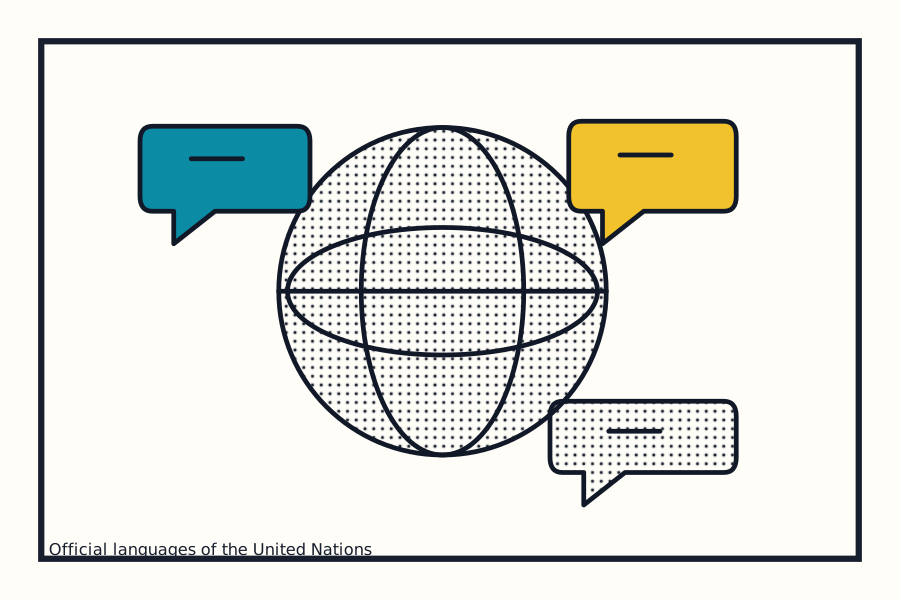
The United Nations has six official languages: Arabic, Chinese, English, French, Russian, and Spanish. They support interpretation in meetings and translation of documents, though particular language arrangements can vary by setting.
One parent one language is a family strategy in which each caregiver usually speaks a different language with a child. It can make language patterns predictable, but it is a flexible routine rather than a requirement for successful bilingual communication.