Word order in different languages describes how a language arranges words and phrases to make a sentence. A useful starting point is the order of subject, object, and verb: English commonly uses subject–verb–object, as in “Mira folded the map.” Other languages may place the verb before or after the object. The pattern matters, but it is only one part of how a sentence communicates meaning.
Start with who, what, and the action
In “Mira folded the map,” Mira is the subject, the map is the object, and folded is the verb. Subject–verb–object, often shortened to SVO, names their sequence. If we rearrange the same English words as “The map folded Mira,” the sentence is still possible as a string, but its roles and likely meaning change.
Linguists use labels such as SVO, SOV, and VSO to describe a language’s common ordering of these parts. They are useful summaries, not rules that every sentence must follow. Questions, commands, poetic lines, and clauses with special emphasis can depart from the most frequent pattern.
The order can vary because other clues carry the roles
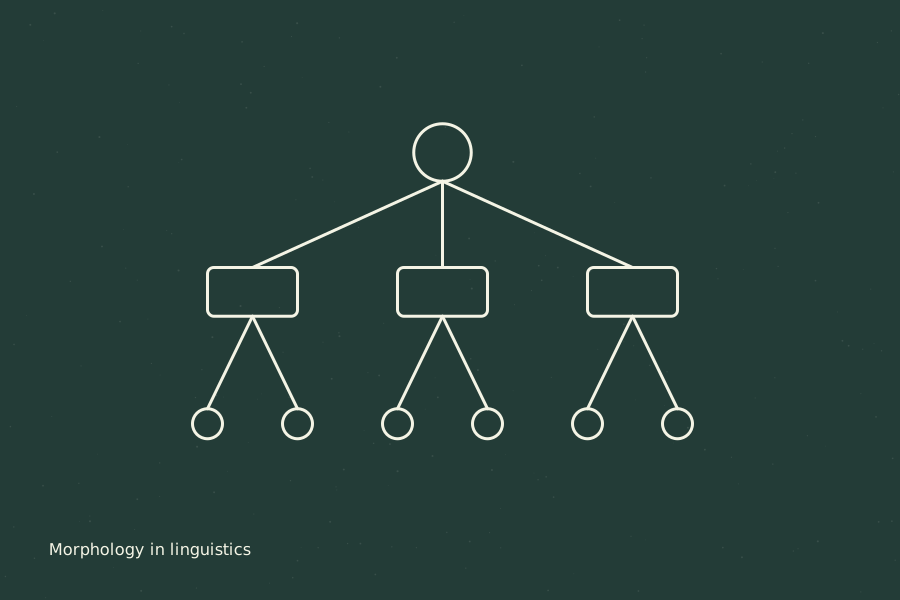
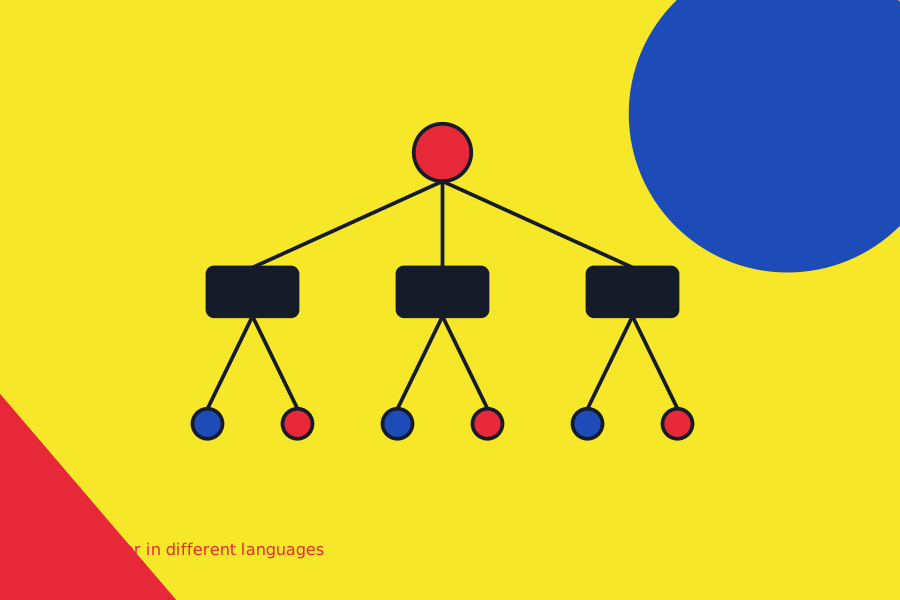
Languages differ in how much they rely on position. In some, case marking or other grammatical endings help identify a noun’s role. In others, particles, agreement on a verb, or shared context may contribute. A language can also use more than one clue at once. Essentials of Linguistics explains that sentence structure has hierarchical groupings as well as a left-to-right order; that is, words form phrases, and phrases combine into larger sentences. [1]
Imagine a made-up language where a short ending on a noun marks it as the object. A speaker could put “the basket” before or after “Neri carried,” while the ending continues to signal what was carried. If that ending is absent, changing the order might change which person or thing listeners understand as the subject. This invented example illustrates a mechanism; it is not a claim about a particular language.
Basic order is not the whole sentence
A language’s basic order is a broad tendency, often easiest to see in plain statements. Real sentences may move a phrase to the front because it is already known, contrastive, or being highlighted. “The map, Mira folded” puts the object first in English, but a listener can recover the relationship from the wording and context. In writing, punctuation may help; in speech, stress and timing can make the focus clearer.
Even neighboring languages may organize information differently, and speakers may use several patterns in one language. So avoid treating a word-order label as a complete description. It tells you the usual relative arrangement of major parts, not every possible sentence or every strategy for emphasis.
A practical comparison exercise
Take a simple sentence such as “The child opened the window.” Mark the subject, verb, and object. Then translate it into a language you are learning, using a trustworthy example or asking a fluent speaker. Record the order of those three parts, and underline any noun ending, particle, or verb marker that helps identify their roles.
Next, compare a second sentence with the same roles but a different subject, such as “The neighbor opened the window.” Ask whether the object stays in the same position. Finally, check a question or a sentence that puts the window in focus. Does the order change? What other clue makes the sentence understandable? Keep the examples and the language variety consistent, and do not assume a pattern from a single sentence.
Use patterns as a guide, not a verdict
When you meet an unfamiliar sentence, first look for recurring positions. Then look for repeated endings or small words that accompany a role. Compare multiple examples, including sentences with different subjects and objects. Essentials of Linguistics recommends using sentence data to identify patterns such as basic subject–object–verb order, illustrating how comparison can reveal a structure. [1]
This approach is useful for reading, translation, and writing: you can notice which parts a language tends to place together and where information appears. The aim is not to force every sentence into one template. It is to learn which clues your chosen language uses and how speakers combine them in context.